


Turquoise: The Celestial Blue of Ancient Skies
A connection to Brazilian gemstone heritage
Turkish Sky Blue
Turquoise is one of the world’s most recognisable gemstones. Its colour ranges from pale robin’s-egg blue to vivid azure and blue-green. The finest examples possess a calm, even tone that seems to hold its own light.
Usually cut as a smooth cabochon, turquoise reflects light softly rather than through facets. The effect is serene, distinctive, and quietly striking.
For thousands of years, it has been associated with the sky, protection, joy, and the infinite space above the earth. Its appeal is both visual and cultural, connecting adornment with history.
A Name Shaped By Travel
The word turquoise comes from the Old French pierre tourques, meaning “Turkish stone.” The name reflects the route by which the gemstone reached medieval Europe, though important historic sources lay elsewhere, particularly in Persia and the Sinai Peninsula.
In ancient Egypt, it was called mefkat, a word associated with joy and delight. In Persia, it was known as pirouzeh, meaning victory. Its modern name may point to trade through Turkey. Its symbolic language reaches much further.
The Gemstone of Ancient Egypt
Turquoise is among the earliest gemstones to have been mined and fashioned into jewelry. Ancient Egyptian miners worked the Sinai Peninsula thousands of years ago, and the region was known as Mafkat, often translated as “country of turquoise.”
The stone appeared in necklaces, rings, scarabs, carvings, and ceremonial objects, often beside gold. Its cool blue-green colour contrasted beautifully with warm metal and carried associations with joy, protection, renewal, and the enduring order of the heavens.
Royal treasures, including objects from the tomb of Tutankhamun, show how highly turquoise was regarded. It was more than decoration. It brought a celestial note to objects made for power, ceremony, and the afterlife.
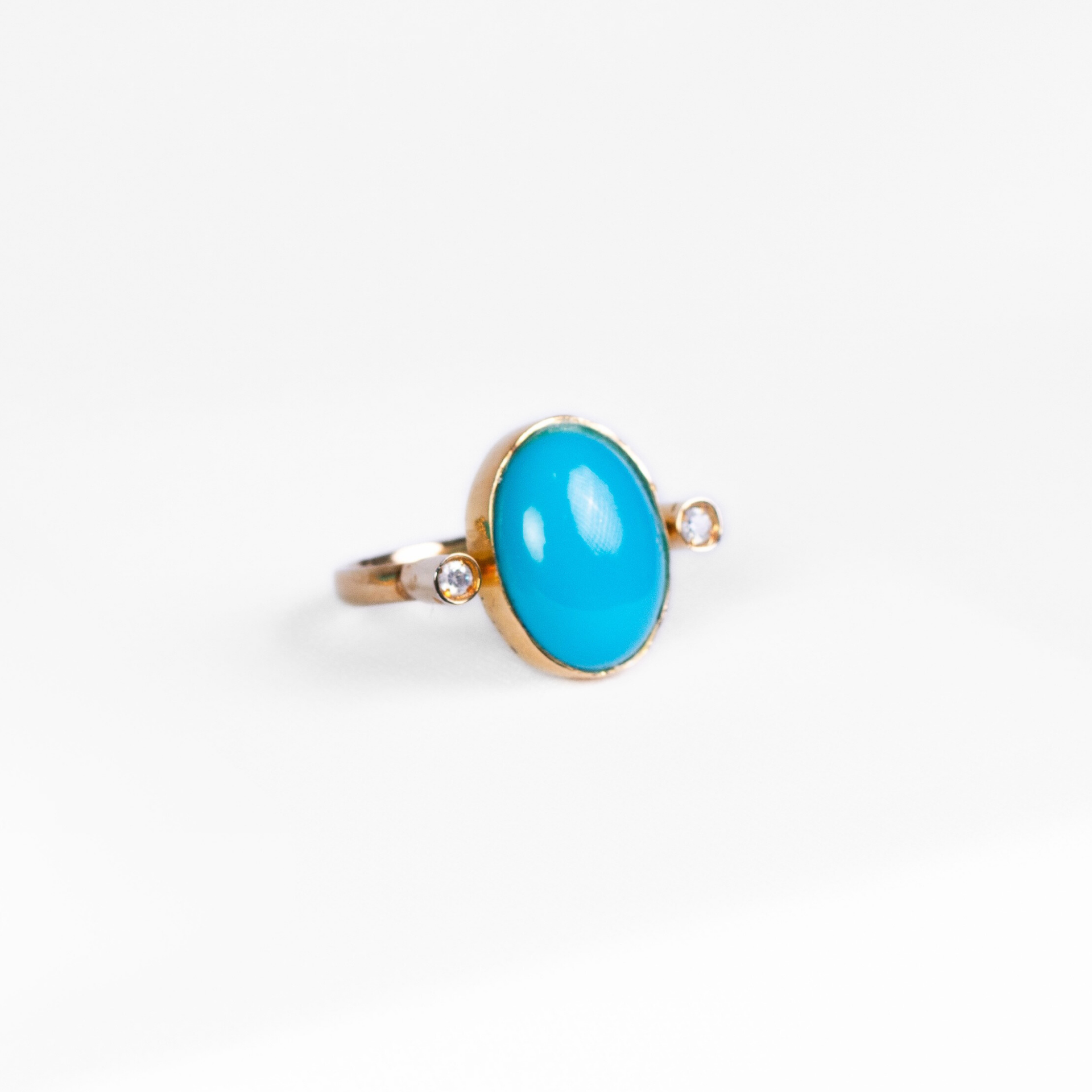
The smooth cabochon shape of this Cabochon Turquoise Ring in Gold allows the turquoise’s natural color to remain the central focus.
Heaven in Stone
The relationship between turquoise and the sky continued through Persian history. Persian artisans used it in jewelry, decorative objects, and architecture, where its intense blue brought a heavenly character to domes and tiled surfaces.
This symbolism remains one of turquoise’s most enduring qualities. Its colour suggests distance and openness: the first clear sky after rain, the quiet horizon over water, the vast atmosphere above a mountain range.
Persian traditions also associated turquoise with victory and protection. Across centuries, it became a visual language for hope, safety, and connection to something greater than the self.
Turquoise in Indigenous American Art
Turquoise has a long and significant history among Indigenous peoples of the Americas. It was mined and traded across the Southwest long before European arrival, and its meanings vary between nations and traditions.
In several Southwestern cultures, turquoise appeared in jewelry, amulets, ceremonial objects, and trade. Its sky-blue colour contributed to its sacred character, linking the earth with the celestial realm. Silver turquoise jewelry, now closely associated with the American Southwest, developed through complex cultural exchange, including the work of Navajo and other Indigenous silversmiths.
Turquoise in Indigenous art is not simply decorative. It belongs to a broader story of land, craftsmanship, ceremony, exchange, and identity.
Colour, Matrix, and Natural Character
Turquoise is a hydrated copper and aluminium phosphate mineral. Copper often contributes to its blue or blue-green colour, while other mineral influences affect the final tone.
Some stones are an even, uninterrupted blue. Others contain darker veins or web-like patterns known as matrix, which can give each cabochon a distinctive, landscape-like identity. An even blue is widely admired for its clarity of colour, while matrix reveals more of the stone’s geological character.
Turquoise is also relatively soft compared with sapphire, ruby, or diamond, so it is best treated with care. Its smoother cabochon form helps protect the stone while allowing its colour to remain the focus.
Turqouise in Contemporary Jewelry
Modern turquoise jewelry balances ancient symbolism with clean design. The gemstone works naturally with yellow gold, whose warmth intensifies its blue tones, and with sterling silver, which creates a cooler, more architectural effect.
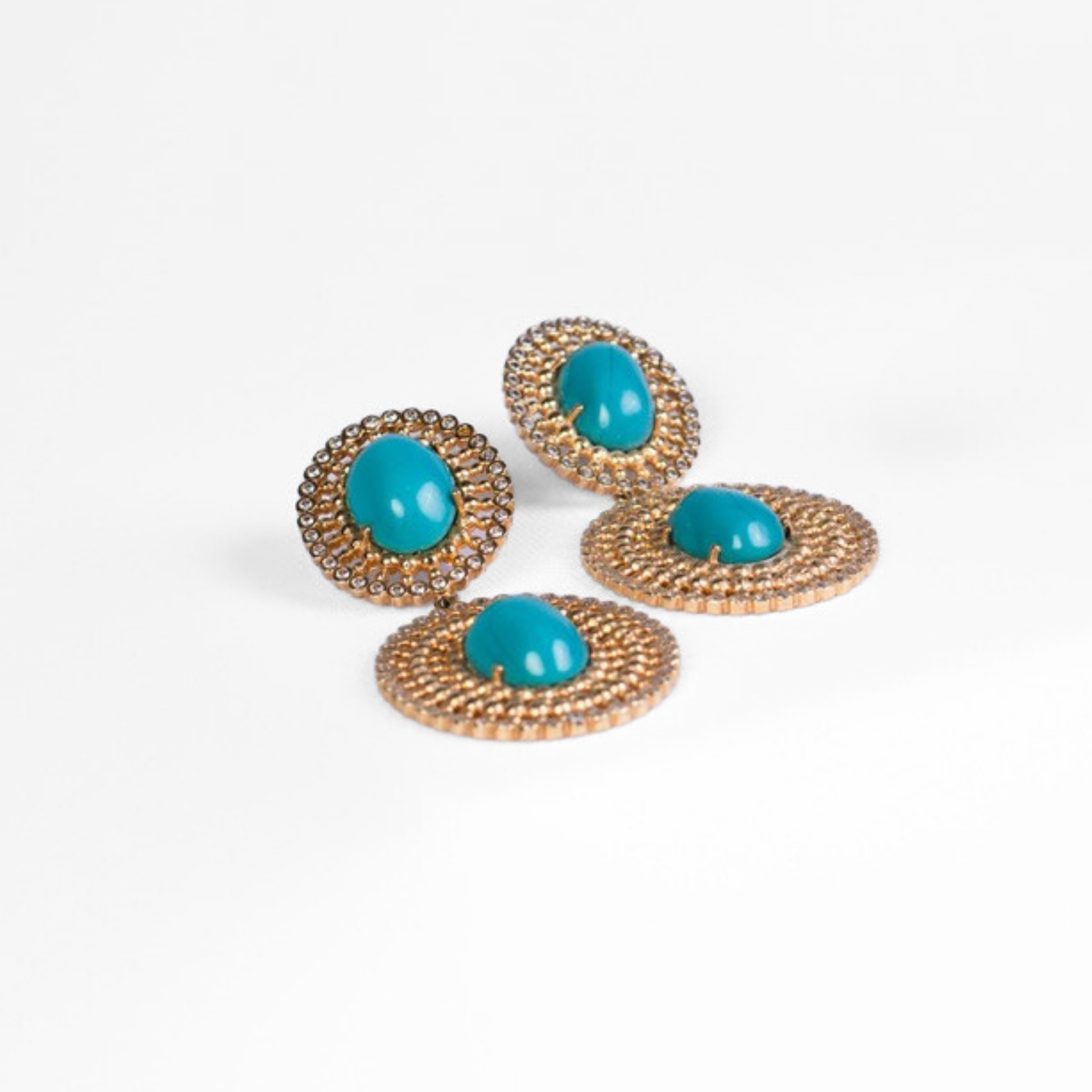
At Collet’s Jewelry, turquoise appears in carefully considered pieces that allow the stone to remain the focal point. The Cabochon Turquoise Ring in Gold reflects the gemstone’s traditional character in a refined contemporary setting, while the wider turquoise collection includes earrings and other designs suited to both subtle wear and more expressive styling.
For further exploration, Collet’s gemstone guide places turquoise alongside other natural stones celebrated for their colour, history, and cultural significance.
Worn close to the face, turquoise brings a clear, refreshing note to the entire composition.
A Fragment of the Sky
Turquoise has survived centuries of changing fashion because its meaning remains remarkably clear. It represents the sky without imitating it exactly. Shaped by the earth, it still recalls openness, calm, and infinity.
From ancient Sinai to Egyptian royal adornment, Persian architecture, and Indigenous American artistic traditions, turquoise has been treated with reverence. Today, a turquoise ring or pair of earrings can carry that legacy in a distinctly personal way: colour with character, history with presence, and beauty beyond passing trends.
Explore Collet’s turquoise jewelry, or get in touch if you would like guidance choosing a piece. Turquoise remains what it has always suggested: a small, enduring fragment of the sky, held close.
Recent Posts